Tuesday, August 14, 2012

Download Ebook Helping Children Succeed: What Works and Why, by Paul Tough

Download Ebook Helping Children Succeed: What Works and Why, by Paul Tough

After getting such information from us about this book what should you do? Once again, this is a suitable book that is composed particularly for you, the person who likes analysis a lot. You are the readers with large inquisitiveness and you will not quit of a publication. Helping Children Succeed: What Works And Why, By Paul Tough really what you require now. You may not be weird with this title of the book, may not you? It is not the time that you will quit to end up. You could complete it whenever you desire.
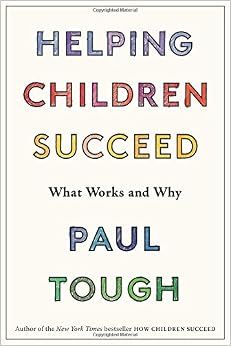
Helping Children Succeed: What Works and Why, by Paul Tough

Helping Children Succeed: What Works and Why, by Paul Tough


Helping Children Succeed: What Works and Why, by Paul Tough


Download Ebook Helping Children Succeed: What Works and Why, by Paul Tough

Feature us to review a brand-new publication that is coming lately. Yeah, this is a brand-new coming book that many individuals truly wish to read will you be just one of them? Obviously, you need to be. It will certainly not make you feel so tough to enjoy your life. Even some people assume that reading is a tough to do, you should make certain that you can do it. Difficult will be really felt when you have no ideas regarding just what sort of book to read. Or often, your analysis product is not fascinating enough.

Associated with just what take place in this situation, it does not suggest that entertainment will certainly be always fiction. Here, we will certainly reveal you how a book can offer the home entertainment as well as accurate kinds to read. The book is Helping Children Succeed: What Works And Why, By Paul Tough Do you understand about it? Of course, this is a very well-known book that is also created by a well-known author.

Guide is a publication that can help you locating the reality in doing this life. Moreover, the suggested Helping Children Succeed: What Works And Why, By Paul Tough is additionally written by the specialist author. Every word that is offered will not problem you to think approximately. The way you enjoy analysis may be started by another book. However, the means you need to check out book repeatedly can be started from this preferred book. As reference this publication additionally offers a much better principle of the best ways to draw in individuals to review.

After reading this book, you will truly understand exactly how specifically the importance of reviewing books as common. Believe again as what this Helping Children Succeed: What Works And Why, By Paul Tough provides you brand-new lesson, the various other publications with lots of motifs and also categories as well as million titles will certainly also provide you exact same, or greater than it. This is why, we always offer exactly what you need and just what you have to do. Numerous collections of guides from not just this country, from abroad a countries worldwide are given right here. By giving very easy method to assist you discovering the books, hopefully, checking out practice will certainly spread out conveniently to other individuals, too.

Helping Children Succeed: What Works and Why, by Paul Tough

Review

"Tough's research demonstrates that all children have the capacity for self-control, grit, and success if given the right tools to work with from birth. Informative and effective methods to help children overcome issues and thrive at home and in school."—Kirkus Reviews Tough (contributing writer, New York Times Magazine) builds on the research he outlined in his book How Children Succeed to address at great depth the ways adults can build success for children who face the greatest adversity. Contending that it is the environment that shapes children's ability to develop significant noncognitive skills such as perseverance and optimism, Tough presents research that shows success in these areas is possible for all children. Diving into studies and supporting their conclusions by defining real-life examples, Tough convincingly argues that classroom climate is what needs changed in order to shape students' experiences. While advocating for transformation to a broken system that could turn disadvantaged kids' lives around, the author also acknowledges the small things that make a difference. Tough calls upon individuals to make those small steps and shows that by looking through a different lens it is possible to see how education can be better structured for the future. VERDICT For readers concerned with finding practical ways to engage with and improve education for those children with the most to lose.—Rachel Wadham, Brigham Young Univ. Libs., Provo, UT —Library Journal  

Read more

About the Author

PAUL TOUGH is the author of Helping Children Succeed and How Children Succeed, which spent more than a year on the New York Times hardcover and paperback bestseller lists and was translated into twenty-eight languages. He is also the author of Whatever It Takes: Geoffrey Canada’s Quest to Change Harlem and America.He is a contributing writer to the New York Times Magazine and a regular contributor to the public-radio program This American Life. You can learn more about his work at paultough.com and follow him on Twitter @paultough.

Read more

Product details

Hardcover: 144 pages

Publisher: Houghton Mifflin Harcourt (May 24, 2016)

Language: English

ISBN-10: 9780544935280

ISBN-13: 978-0544935280

ASIN: 0544935284

Product Dimensions:

5.5 x 0.7 x 8.2 inches

Shipping Weight: 8 ounces (View shipping rates and policies)

Average Customer Review:

4.2 out of 5 stars

89 customer reviews

Amazon Best Sellers Rank:

#41,330 in Books (See Top 100 in Books)

In his second book, HOW CHILDREN SUCCEED, Paul Tough wrote a wonderful chapter all about the adverse effects that children living in poverty are subject to: physical, cognitive and emotional deficits as a result of the trauma they are more likely to suffer than children living in comparative affluence. But then, unfortunately, for most of the rest of that book, Tough took a hard right turn into “character”: what has since become the “Grit Movement” as championed by Angela Duckworth, whom Tough promoted. Thanks to Duckworth, as promoted by Tough, poor children of color, many of whom face more challenges and obstacles in a day than most people face in a year, are routinely told that their problem is that they lack “grit” and if they could only learn to persevere through obstacles, they too could have the “success” that affluent whites assume as their due. In my review of that book, I said that I hoped Tough would circle back around to explore more deeply the connections among trauma, deprivation, attachment and “character”. This book appears to have heeded my call.What seems to have changed Tough’s direction is growing research that shows that “grit” cannot be taught, at least not in terms of direct instruction. Imagine, simply telling kids to “work hard, be nice” doesn’t seem to do much. How odd. But Tough stumbled on the work of Deci and Ryan which seems to show that non-cognitive abilities can be improved, but it involves more than rewarding kids for being grittier or punishing them for not. In fact, rewards and punishments actually do harm because they increase extrinsic motivation (motivation to get the reward or avoid the punishment) at the cost of decreasing intrinsic motivation (motivation for pursuing an activity for its own sake). In other words, Tough is trying to morph into Alfie Kohn.I very much appreciate Tough’s (belated) recognition of research demonstrating the benefits of progressive, whole child, experiential, social-emotional learning. Brain science is showing us that learning is not something that happens in a vacuum, but within the context of human relationships and pursuits based on interest and relevance. Education is not about stuffing random, disconnected facts into kids’ heads and seeing what they can regurgitate on a test, but rather about exciting and channeling (or, at the very least, not squelching) children’s innate drive to explore, experiment and adapt. I am very happy that Tough seems to understand the challenges that poverty presents to that natural process and how understanding, supportive relationships and wraparound services are ways to ameliorate some of the worst effects.But, as always with Tough, there is much to argue with. First, Tough can’t seem to get past the quest for test scores. All of the interventions he supports are because they raise test scores. Standardized tests are a snapshot in time which, at best, measure how well particular students were able, in that particular moment, to take that particular test. They have little bearing on a child’s actual abilities or their likely success in college or the real world, much less their interests or who they are as people. The purpose of education is not to churn out children as widgets that can be plugged into the corporate world. The purpose of education is to develop unique, healthy, well-rounded individuals who are prepared to actively participate in a democratic republic.Second, after spending his previous books building up the likes of Geoffrey Canada (who twice “fired” an entire cohort of students because they weren’t performing well on the standardized tests) and Angela Duckworth (who is profiting from teaching children in poverty “grit” skills, even though she herself denies that’s what her work should be used for), Tough refuses to admit any previous error or fully acknowledge the implications of his new perspective. I never would have thought I would be an admirer of Diane Ravitch after her work as Assistant Secretary of Education under George H.W. Bush and her launching of the “accountability” movement, but she has fully renounced her former positions and openly admitted the error of her thinking. Tough needs to take a similar openly self-reflective course.I could also fault Tough for refusing to follow his own research to its logical conclusion. If a child’s environment is so important to his/her development (and it is), then why are we only tinkering around the edges of the environment? If poverty is so devastating to children who grow up in it, why focus on education for children in poverty, rather than the environment of poverty itself? Why not call for solutions to income/wealth inequality? Why not structural social changes to eliminate poverty? An end to “austerity” and “neoliberalism”? A call for good, living wage jobs with good benefits? A call for a strong social safety net, universal healthcare and housing as rights? But Tough doesn’t seem to think such grand changes are possible. Neoliberalism is the future, There Is No Alternative. The best we can do is make everyone as comfortable as possible within their allotted station in life. We can improve education for children in poverty, but there’s nothing we can do about poverty itself.Finally, one of my biggest peeves with Tough (and many other “reformers”, such as KIPP) is their complete failure to acknowledge and credit the huge body of work that has gone before them. After promoting “grit” and “no excuses” and other harmful policies, such “reformers” are discovering just how harmful they are and quietly revising their stance to become kinder and gentler and focusing more on relationships, less on punishment. But progressive education is no new thing. It’s been around since at least John Dewey’s day 100 years ago. There is a substantial body of research demonstrating the effectiveness of whole-person, student directed, experiential learning. In fact, the superiority of such education over rote, test-based, direct instruction is so clear that for decades the elite have sent their own kids to schools that use progressive models, such as Sidwell Friends, Lakeside Academy and the University of Chicago Lab School. For decades the powers that be have known what is best for their own children, while foisting “grit” and standardized testing on other people’s children. I guess I’m supposed to be grateful that, in the never-ending quest for “innovation”, the “reformers” are finally stumbling onto what’s been known for 100 years, and maybe now everybody’s children can get an education rooted in whole-child development supported by caring relationships and meeting basic needs. And, if in fact, Tough’s recognition among the “reformers” allows for more progressive education for children in poverty (as well as children not in poverty, but not rich either), then I will be grateful. But please don’t pretend that this is anything new or “innovative”. In fact, Tough and others are quite late to the game.

A 5 Star Idea with a 4 Star Outcome The book Helping Children Succeed: What Works and Why was written by Paul Tough in 2016 and published by Houghton Mifflin Harcourt as a follow up to the research he conducted for his previous book How Children Succeed. As a teacher, the topics that everyone strives to accomplish is understanding how children succeed and being able to find ways to help them succeed. Based on a need to understand those aspects drew my attention to reading more in depth about it. With the rise in high stakes standardized testing, there is a modern obsession with raising students test scores instead of focusing on how to support children into exploring ways to be curious, optimistic, persistent and use self-control. Tough’s book is built around the idea that children in poverty struggle in school which results in lower test scores and affects students throughout their life, making it crucial for educators to understand the affects of growing up in adversity, especially since childhood poverty is on the rise. Since 2013, more than 51% of the nation’s children “fall below the federal government’s threshold for being low income, meaning they are eligible for free or subsidized school lunch” (p.1). After hitting this milestone, American public schools are now making a mission to help children in poverty succeed which is where Tough developed his 125 page book. Throughout Tough’s book there are 23 sections where he breaks down each topic. The sections are: adversity, strategies, skills, stress, parents, trauma, neglect, early intervention, attachment, home visiting, beyond the home, building blocks, discipline, incentives, motivation, assessment, messages, mindsets, relationships, pedagogy, challenge, deeper learning, and solutions. I love how these sections flow together seamlessly and build off of each other as more information is given to the reader. Tough begins by explaining how adversity affects student success from birth and moves into discussing the importance of non-cognitive skills like persistence, growth mindset and grit which is best learned through experience as opposed to explicit instruction. Tough states that “No child ever learned curiosity by filling out curiosity worksheets” (12). Throughout the book, Tough mentions the work of Deci and Ryan which stresses that non-cognitive abilities can be improved, but it involves more than simply rewards and punishments. He notes that education is not about overloading students with random standards based information, but creating excitement and drive to explore and experiment more, which can be a difficult task for students in poverty who need additional support. Tough explains that children who do not come from a home where they are able to form secure attachments to positive adults do not have the perseverance, grit or non-cognitive traits necessary to be successful. Character is developed in environments which children form secure attachments to teachers and caregivers, and are taught in ways that stimulate their autonomy and ability to solve problems. From this, he introduced ideas and suggestions for educators to help develop those skills within students. Tough mentions Deci and Ryan’s work by stating that the three basic human needs that need to be supported in the classroom are autonomy, competence and relatedness. By creating environments that promote these three feelings, students are more motivated and more successful. Overall throughout the book, Tough stresses the importance of the environment children are in whether it is at home or at school. New York Times said it best that Tough “Illuminates the extremes of American childhood: for rich kids, a safety net drawn so tight it’s a harness; for poor kids, almost nothing to break their fall.” Although students in poverty face many obstacles at home that challenge their ability to succeed in school, Tough mentions that the school environment needs to change. He closes out the book by stating that we need to change our policies, practices and way of thinking in order to help children succeed. As a teacher, we can provide 6 hours a day of a supporting environment starting at the age of 5, but what he also states is that the early years of a child’s life is when they are most impacted by adversity. Amounts of stress and a lack of serve and return interactions affects children starting at a young age. To me, it seems like the real issue surrounding this book is poverty throughout the United States. For a teacher, he gives many ways to help children succeed who grow up in adversity which is beneficial to know, but it seems like the best way to tackle the issue is to focus on decreasing poverty throughout the United States. Although I believe that every new teacher could benefit from reading about child development to understand how childhood environments affects children and learn best classroom strategies, I think this book is also suited for new parents to realize how important the early childhood environment is for their children. If you are interested in learning more about Tough’s point of view, his books are available on Amazon and at major bookstores with a retail price of $18.99.

Terrific book that I thoroughly enjoyed. Here are a few things that I especially appreciated as a parent and speech-language pathologist. First, Paul goes into depth about intrinsic motivation and why external rewards generally don't work in the long run. So true! Second, as a university professor, I really liked the description of the academic mindset. I got some great ideas for helping my first-generation university students have a stronger feeling of belonging in my classes. This book is well worth the money and I recommend it very highly.

I'll read it all over again! Loved every section, research and insight into the side of education and personal experiences that affect learning and development which those outside of education/child development don't often realize.

The author notes that children from chronically bad environments may often have resulting brain development that makes life more difficult for these children and for everyone who will be in contact with these children for the rest of these children's lives. Unfortunately, there are too many unstated variables in children's environments, too many over-generalizations, and too many loosely-based assertions for the reader to place much confidence in the material as presented in this book.

This book is an excellent resource for both parents and teachers. It clearly details the factors that influence appropriate child development in the 0-3 year time frame. It is helping me to better understand my struggling students and how I can best help them to achieve. It is easily readable and very engaging. I highly recommend it.

Ok. But more geared for what works globally, than for parenting tips for what works for your specific parenting

Helping Children Succeed: What Works and Why, by Paul Tough PDF
Helping Children Succeed: What Works and Why, by Paul Tough EPub
Helping Children Succeed: What Works and Why, by Paul Tough Doc
Helping Children Succeed: What Works and Why, by Paul Tough iBooks
Helping Children Succeed: What Works and Why, by Paul Tough rtf
Helping Children Succeed: What Works and Why, by Paul Tough Mobipocket
Helping Children Succeed: What Works and Why, by Paul Tough Kindle

Helping Children Succeed: What Works and Why, by Paul Tough PDF

Helping Children Succeed: What Works and Why, by Paul Tough PDF

Helping Children Succeed: What Works and Why, by Paul Tough PDF

Monday, August 13, 2012

Get Free Ebook There's a Bear on My Chair, by Ross Collins

Get Free Ebook There's a Bear on My Chair, by Ross Collins

Checking out a book can help you to enhance your idea, minds, lesson, experiences, and also enjoyable. Even you have reviewed numerous sort of publication; it will certainly give both exact same as well as different impacts. For this publication, you can discover a brand-new means related to what you really require now. By spending just few times a day to review There's A Bear On My Chair, By Ross Collins, you future will be much better with the lesson to obtain currently. Prepare and always remind regarding it!

There's a Bear on My Chair, by Ross Collins

There's a Bear on My Chair, by Ross Collins


There's a Bear on My Chair, by Ross Collins


Get Free Ebook There's a Bear on My Chair, by Ross Collins

Exactly what do you do to begin checking out There's A Bear On My Chair, By Ross Collins Searching guide that you like to review first or discover an intriguing e-book There's A Bear On My Chair, By Ross Collins that will make you would like to review? Everyone has difference with their reason of reading an e-book There's A Bear On My Chair, By Ross Collins Actuary, reviewing habit must be from earlier. Lots of individuals might be love to check out, yet not a publication. It's not mistake. Somebody will certainly be tired to open up the thick e-book with tiny words to read. In more, this is the actual problem. So do occur possibly with this There's A Bear On My Chair, By Ross Collins

Why ought to be There's A Bear On My Chair, By Ross Collins in this website? Obtain much more earnings as just what we have informed you. You could discover the various other alleviates besides the previous one. Relieve of obtaining the book There's A Bear On My Chair, By Ross Collins as just what you really want is additionally given. Why? We provide you numerous kinds of the books that will certainly not make you feel bored. You could download them in the link that we supply. By downloading and install There's A Bear On My Chair, By Ross Collins, you have actually taken the right way to select the ease one, as compared to the inconvenience one.

You understand, as the benefit of reading this There's A Bear On My Chair, By Ross Collins, you may not just get brand-new knowledge. You will really feel so fun and satisfying when reading it. It shows by the visibility of this publication, you could utilize the time flawlessly. Investing the time when being at home will serve enough when you understand actually just what should do. Reviewing is one of the most effective ways to do to accompany your extra time. Of course, it will certainly be more precious than only chatting to the other pals.

So, merely be right here, discover guide There's A Bear On My Chair, By Ross Collins now and review that promptly. Be the initial to read this book There's A Bear On My Chair, By Ross Collins by downloading and install in the link. We have other publications to check out in this site. So, you could find them also effortlessly. Well, now we have actually done to offer you the very best e-book to review today, this There's A Bear On My Chair, By Ross Collins is truly ideal for you. Never ignore that you need this e-book There's A Bear On My Chair, By Ross Collins to make far better life. On-line e-book There's A Bear On My Chair, By Ross Collins will truly offer very easy of every little thing to read and also take the advantages.

There's a Bear on My Chair, by Ross Collins

From School Library Journal

PreS-Gr 2—Mouse has a problem—someone is on his chair! In a miniature red-and-white sweater, Mouse complains to readers, "There's a bear on my chair. He is so big, it's hard to share," and with a friendly wave, viewers meet a polar bear. Mouse tries various ways to get the bear off his chair, such as "a nasty glare," "a pear," and "a scare," and, finally, in a fit of "despair," Mouse leaves. Bear, finding himself alone, returns to his home of snow and ice to announce, "Hey! There's a mouse in my house." The delightful rhyme and rhythm make this title great fun to read aloud. The text takes up one side of each spread, emphasizing words that appear in red font to convey the escalating emotions. Expressive digital illustrations are placed on single-color backgrounds that help focus readers' attention on the characters' dilemmas. VERDICT A must-purchase and instant classic for storytime and one-on-one sharing. Sure to become a favorite.—Karen Ginman, BookOps: The New York Public Library and Brooklyn Public Library

Read more

Review

A playful portrait of impotent rage, Collins’s (The Elephantom) rhyming story looks at what happens when a problem is just too big to tackle...Collins’s drawings win laughs with confident, swooping lines and witty details (the silver tips on the collar of the bear’s Elvis shirt), and his sparkling verse has the ring of a nursery classic.—Publishers Weekly (starred review)Collins' pencil-and-digital illustrations are completely interwoven with the text, enlarging and enhancing the tale with over-the-top humor and expressive body language. The mouse jumps out of a box (in that underwear), offers a juicy pear, glares from atop a ladder, and more. The bear matches these goofy antics as he reads a newspaper, does an Elvis impression, takes a snooze, and checks his cellphone. Silly, laugh-out-loud fun.—Kirkus Reviews...delightful, rhyme-filled read that's sure to remind parents of classic Dr. Seuss.—Pregnancy & Newborn

Read more

See all Editorial Reviews

Product details

Age Range: 2 - 5 years

Grade Level: Preschool - Kindergarten

Lexile Measure: AD460L (What's this?)

amznJQ.available('jQuery', function() {

amznJQ.available('popover', function() {

jQuery("#lexileWhatsThis_db").amazonPopoverTrigger({

showOnHover: true,

showCloseButton: false,

title: 'What is a Lexile measure?',

width: 480,

literalContent: 'A Lexile® measure represents either an individual's reading ability (a Lexile reader measure) or the complexity of a text (a Lexile text measure). Lexile measures range from below 200L for early readers and text to above 1600L for advanced readers and materials. When used together Lexile measure help a reader find books at an appropriate level of challenge, and determine how well that reader will likely comprehend a text. When a Lexile text measure matches a Lexile reader measure, this is called a "targeted" reading experience. The reader will likely encounter some level of difficulty with the text, but not enough to get frustrated. This is the best way to grow as a reader - with text that's not too hard but not too easy.',

openEventInclude: "CLICK_TRIGGER"

});

});

});

Hardcover: 32 pages

Publisher: Nosy Crow; 1st edition (August 9, 2016)

Language: English

ISBN-10: 0763689424

ISBN-13: 978-0763689421

Product Dimensions:

11.1 x 0.4 x 11 inches

Shipping Weight: 1.1 pounds (View shipping rates and policies)

Average Customer Review:

4.7 out of 5 stars

109 customer reviews

Amazon Best Sellers Rank:

#30,722 in Books (See Top 100 in Books)

Bought 24 books for my two Grandsons (12 for each Grandson), one for every night starting on December 1st, last one to be read on Christmas Eve!!! Out of all 24 books, 'There's a Bear on My Chair' was my three year old Grandson's favorite!!! His four year old Brother enjoyed it, also. Both Boys were able to repeat the story back to their Mom and Dad. The whole idea of having a new book read every night leading up to Christmas, was a hit and will be continue next year!!! Wonderful time for their Dad to share his love for books and reading!!!

my 2.5 year old cracks up at this book! he has memorized the words and loves reading it every night before bed!

Read this tonight for our bedtime story and my 20 monther loved it! Kept his attention, rhymes were cute, we both enjoyed it. I see this being a favorite new book. Along with the friendly blue truck. And brown bear :)

My granddaughter loves this book. The rhyming is fun and the illustrations can be really funny. (Elvis is her favorite, the cell phone is mine)

Awesome book, so much fun to read. Great read aloud to kids, lots of rhyming. Also, great illustrations, lots of details to point out as you are reading.

this book has great illustrations. bright colors, and easy to read. not too many words per page, so it flows well. very easy for you to read to your kids. the rhyming scheme keeps you interested.

Such a cute story, and my Granddaughter loves to hear this story over and over again!

Bought this a birthday gift for my niece. The story is easy to follow, well illustrated and a fun read. We read it several times and she has yet to get bored with it.

There's a Bear on My Chair, by Ross Collins PDF
There's a Bear on My Chair, by Ross Collins EPub
There's a Bear on My Chair, by Ross Collins Doc
There's a Bear on My Chair, by Ross Collins iBooks
There's a Bear on My Chair, by Ross Collins rtf
There's a Bear on My Chair, by Ross Collins Mobipocket
There's a Bear on My Chair, by Ross Collins Kindle

There's a Bear on My Chair, by Ross Collins PDF

There's a Bear on My Chair, by Ross Collins PDF

There's a Bear on My Chair, by Ross Collins PDF

Tuesday, July 17, 2012

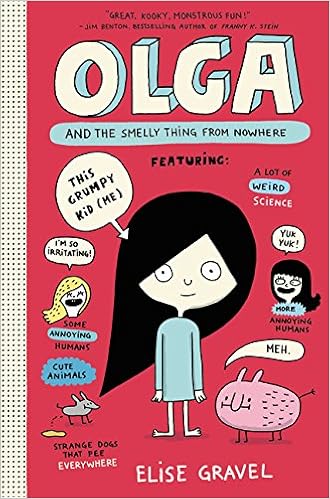
Free Download Olga and the Smelly Thing from Nowhere, by Elise Gravel

Free Download Olga and the Smelly Thing from Nowhere, by Elise Gravel

The factors that make you must review it is the associated subject to the problem that you truly want right now. When it's going to make better possibility of analysis products, it can be the way you should absorb the same ways. Yeah, the manner ins which you could take pleasure in the time by reading Olga And The Smelly Thing From Nowhere, By Elise Gravel, the time that you can use to do great task, and the time for you to obtain exactly what this book provides to you.

Olga and the Smelly Thing from Nowhere, by Elise Gravel

Olga and the Smelly Thing from Nowhere, by Elise Gravel


Olga and the Smelly Thing from Nowhere, by Elise Gravel


Free Download Olga and the Smelly Thing from Nowhere, by Elise Gravel

Currently, just what do you think of the arising publications this time? So many books exist and also published by numerous authors, from lots of countries in this world. However, have you to be much more selective to pick among the best. If you are puzzled on how you pick guide, you could draw from the subject to provide, the writer, as well as the recommendation.

However here, you could get it easily this Olga And The Smelly Thing From Nowhere, By Elise Gravel to review. As known, when you review a book, one to remember is not only the title, yet likewise the genre of the book. You will see from the title that your publication selected is dead-on. The proper book alternative will certainly influence exactly how you check out guide completed or not. However, we make sure that everyone right here to seek for this publication is a really follower of this kind of book.

We have hundreds lists of guide titles that can be your support in discovering the appropriate publication. Searching by the title will make you simpler to get just what book that you actually want. Yeah, it's because many books are offered in this site. We will show you just how sort of Olga And The Smelly Thing From Nowhere, By Elise Gravel is resented. You might have looked for this book in numerous places. Have you found it? It's better for you to seek this publication and other collections by below. It will certainly ease you to locate.

To motivate the existence of the book, we support by giving the online library. It's really not for Olga And The Smelly Thing From Nowhere, By Elise Gravel just; identically this book turns into one collection from many books catalogues. The books are provided based upon soft documents system that can be the first means for you to overcome the motivations to obtain brand-new life in much better scenes and perception. It is not in order to make you really feel overwhelmed. The soft documents of this publication can be saved in specific ideal devices. So, it can relieve to check out every single time.

Olga and the Smelly Thing from Nowhere, by Elise Gravel

From School Library Journal

Gr 2–5—Olga is a socially awkward, animal-loving kid scientist (and an expert on animal poop). She finds that critters are far more interesting than people. In fact, Olga's only friend is the spider that lives under the bathroom sink, but he is not very cuddly and doesn't talk much. Luckily for Olga, she discovers an unknown creature that she dubs olgamus ridiculus, otherwise know as Meh. Olga embarks on a quest to understand her new friend better, but that leads her away from the safe haven of her home. As Olga tries to learn what her new pet eats, she meets some interesting people, a far cry from the irritating ones she normally encounters. For fans of "Dork Diaries" and "Captain Underpants," Olga will be a big hit. The story is embedded with comical illustrations, speech bubbles, charts, and pictures showing Olga's quirky and sometimes judgmental personality. Kids will devour the toilet humor along with the quick one-liners Olga throws out. As readers get deeper into the plot, themes of peer pressure and being oneself emerge, giving the goofy tale a little depth. VERDICT Chuckle-worthy and fun, this is a great purchase for fans of heavily illustrated chapter books.—Brittney Kosev, Honey/Rush Elementary, Lubbock, TX

Read more

Review

“Great, kooky, monstrous fun!” (Jim Benton, bestselling author of Franny K. Stein)“An apt readalike for fans of Wimpy Kid, and Gravel deploys spot art, larger illustrations, word balloons, and chunks of text with great success in the layout.” (Bulletin of the Center for Children’s Books)“A visually interesting mix of illustration and story, punctuated by numerous lists, comic panels, and cartoon diagrams and led by a smart female protagonist. A bubble-gum crowd pleaser with wide audience appeal.” (Kirkus Reviews)“This laugh-out-loud book is a perfect pick for transitioning readers with a penchant for silly stories, or graduates of the Fly Guy series.” (Booklist)“Researching the creature she dubs Meh fills Olga’s days with purpose and her notebook with hilarious quips (”He doesn’t like it when I put a sock on his head.... He’s really scared of bananas”), which Gravel captures in her signature brand of chunky cartooning, accented with red.” (Publishers Weekly)“Readers will get lots of laughs out of the steady stream of gross-out jokes, as well as Olga’s misanthropic humor, though her attitude toward humans softens slightly by book’s end.” (Publishers Weekly)“[An] obvious sell to fans of animals, but it will also hit a humorous note with anybody who has felt a little left behind by these things we call humans.” (Bulletin of the Center for Children’s Books)“For fans of Dork Diaries and Captain Underpants, Olga will be a big hit. Kids will devour the toilet humor along with the quick one-liners Olga throws out.” (School Library Journal)“Animal-loving Olga makes her biggest scientific discovery yet in this amusing story!” (Recommended on “The Ultimate Summer Reading List for 9- to 12-Year-Olds—2017 Edition”) (Brightly)

Read more

See all Editorial Reviews

Product details

Age Range: 8 - 12 years

Grade Level: 3 - 7

Series: Olga (Book 1)

Hardcover: 176 pages

Publisher: HarperCollins (March 14, 2017)

Language: English

ISBN-10: 0062351265

ISBN-13: 978-0062351265

Product Dimensions:

5.5 x 0.8 x 8.2 inches

Shipping Weight: 1.8 pounds (View shipping rates and policies)

Average Customer Review:

4.6 out of 5 stars

35 customer reviews

Amazon Best Sellers Rank:

#56,908 in Books (See Top 100 in Books)

My 10-year-old wanted the second book the minute she finished this one. Is there a second book? Will there be? She's been drawing Olga and the cute/weird animals and carrying the book in her backpack. My daughter is a reluctant reader so I'm thrilled when she attaches to a series. I won't let her read the Dork Diaries due to the trite, shallow, mean-girl way girls are framed in that series. Olga for the win! Hope to see more from this author.

I purchased this book for a 9 year old girl based on the illustration and design, but returned it before giving it to her because of the book’s negative message. It starts off by saying that human beings are terrible, so that’s why the main character prefers to be around animals. Even the cover says the main character is a grump. I like the idea of a highly visual science journal, but the pessimistic Olga isn’t the kind of character or role model that I want to provide a child.

My 10 year old daughter thought it was really funny. Meh, Olga's pet, was a cute companion. She was also into science and that was a positive for young girls. My daughter has loaned out her copy to several friends. The only bummer was that the book wasn't part of the AR library/catalog.

This story is sweet on so many levels and funny. I just got on here to buy the second book but figured I should leave a positive review now. Our children that enjoyed this book are 12 and 9. I really enjoyed the book as well.

well, my name is OLGA :) so I wanted my baby to have a book, supposedly, about me when she grows up. I read it myself and gotta say it's pretty fun. I am an adult and enjoyed it very much.

My 5-year-old granddaughter and I read this book together the first time. She's read it three or four times since then. We loved Olga, a girl with a strong love of science. The Smelly Thing from Nowhere was a fun surprise.

Very silly story. Laugh out loud. A girl discovers a creature and uses scientific theory to try to figure out what it is.

Fun book, daughter loves the Olga books + If Lost by the same author.

Olga and the Smelly Thing from Nowhere, by Elise Gravel PDF
Olga and the Smelly Thing from Nowhere, by Elise Gravel EPub
Olga and the Smelly Thing from Nowhere, by Elise Gravel Doc
Olga and the Smelly Thing from Nowhere, by Elise Gravel iBooks
Olga and the Smelly Thing from Nowhere, by Elise Gravel rtf
Olga and the Smelly Thing from Nowhere, by Elise Gravel Mobipocket
Olga and the Smelly Thing from Nowhere, by Elise Gravel Kindle

Olga and the Smelly Thing from Nowhere, by Elise Gravel PDF

Olga and the Smelly Thing from Nowhere, by Elise Gravel PDF

Olga and the Smelly Thing from Nowhere, by Elise Gravel PDF

Thursday, July 12, 2012

PDF Ebook Before Night Falls: A Memoir, by Reinaldo Arenas Dolores M. Koch

PDF Ebook Before Night Falls: A Memoir, by Reinaldo Arenas Dolores M. Koch

Obviously, Before Night Falls: A Memoir, By Reinaldo Arenas Dolores M. Koch comes to be likewise a good factor of you to invest your leisure time for analysis. It is different with other book that may require ore times to check out. If you have actually been falling in love with this publication, you can precisely get it as one of the analysis materials and buddies to accompany spending the moment. Then, you can also get it as other fantastic individuals find as well as read this publication. From this circumstance, it is so clear that this publication is really needed to get as the referred publication since it appears to be boosting publication.

Before Night Falls: A Memoir, by Reinaldo Arenas Dolores M. Koch

Before Night Falls: A Memoir, by Reinaldo Arenas Dolores M. Koch


Before Night Falls: A Memoir, by Reinaldo Arenas Dolores M. Koch


PDF Ebook Before Night Falls: A Memoir, by Reinaldo Arenas Dolores M. Koch

Being a much better individual sometimes most likely is difficult to do. Furthermore, changing the old habit with the new behavior is hard. Actually, you may not have to change suddenly the old behavior to talking. Hanging around, or juts gossiping. You will certainly need detailed activity. Additionally, the method you will certainly alter your habit is by the reading behavior. It will make so difficult obstacle to solve.

If you want actually obtain guide Before Night Falls: A Memoir, By Reinaldo Arenas Dolores M. Koch to refer now, you need to follow this page constantly. Why? Remember that you need the Before Night Falls: A Memoir, By Reinaldo Arenas Dolores M. Koch source that will offer you best expectation, do not you? By seeing this internet site, you have begun to make new deal to always be updated. It is the first thing you could start to obtain all profit from remaining in a site with this Before Night Falls: A Memoir, By Reinaldo Arenas Dolores M. Koch and also various other compilations.

After downloading and install the soft file of this Before Night Falls: A Memoir, By Reinaldo Arenas Dolores M. Koch, you can begin to read it. Yeah, this is so pleasurable while someone ought to review by taking their huge books; you are in your new way by only manage your gizmo. And even you are working in the office; you could still make use of the computer system to read Before Night Falls: A Memoir, By Reinaldo Arenas Dolores M. Koch completely. Certainly, it will not obligate you to take many web pages. Just page by page depending upon the moment that you need to check out Before Night Falls: A Memoir, By Reinaldo Arenas Dolores M. Koch

Actually, this is not a force for you to like this book as well as check out up until surface this book. We reveal you the outstanding publication. It will certainly be so pity if you miss it. This is not the right time for you to miss out on the Before Night Falls: A Memoir, By Reinaldo Arenas Dolores M. Koch not to check out. It can assist you not only fulfilling this vacation times. After holidays, you will certainly obtain something brand-new. Yeah, this publication will actually lead you to life much better. This is why; this recommended book is much said for you that wish to move on constantly.

Before Night Falls: A Memoir, by Reinaldo Arenas Dolores M. Koch

About the Author

Reinaldo Arenas was born in Cuba in 1943. In 1980, he was one of 120,000 Cubans who arrived in the United States on the Mariel boatlift. Arenas settled in New York where he lived until his death from AIDS ten years later.

Read more

Excerpt. © Reprinted by permission. All rights reserved.

INTRODUCTIONIn May of 1980, the Cuban dissident poet and novelist Reinaldo Arenas (1943–1990) arrived in Key West, Florida, after a harrowing five-day sea voyage on a pleasure craft named the San Lázaro. Having thus completed his own Mariel “exodus” that should have taken no more than seven hours, he expected to be welcomed by the American intellectual community that had hailed his works, published abroad while he was still in Cuba. He did not realize how parsimoniously the title of dissident was meted out to foreign authors (who ever heard of a dissident American author?) by the U.S. intellectual community and its publishers. Throughout the 1960s, ’70s, and ’80s, “dissident” was a term customarily restricted to certain, and only certain, Soviet and Eastern European authors, the qualifications for which have never been revealed by Washington insiders or the then budding media conglomerates. Latin American authors were not dissidents but “exiles.” Cuban exiles, Haitian exiles, Dominican exiles, Chilean exiles, Argentine exiles. Manuel Puig (Argentina) was not a dissident writer; Milan Kundera (Czechoslovakia) was. Likewise, Solzhenitsyn (USSR); but not Manlio Argueta (El Salvador). And especially not Cubans, writers or otherwise—Gusanos (worms), escoria (dregs), agentes del CIA (CIA agents), perhaps. Reinaldo did not know that in America he would become, not a celebrity, but an invisible man; that he would vanish, disappear.There is an old saying of the Cold War, first told me by Carlos Franqui, one of the early revolutionaries who joined Fidel Castro in the Sierra Maestra, to organize and direct Radio Rebelde: “In Communism and in Capitalism, they kick you in the ass,” he said. “But the difference is, under Communism, you have to smile and say, Thank you; whereas under Capitalism, at least you can scream.” Well, Reinaldo Arenas had come to scream…In time, of course, Arenas would learn that when you scream without a microphone, nobody hears you, except maybe the next-door neighbor, who calls the landlord who calls the police, to have you evicted from your 43rd Street, rat-infested, New York City apartment. In the meantime, professors at famous American universities began expunging his novels from their syllabuses. Newspapers would select reviewers who had just come back from their latest two-week junket in Havana, all expenses paid by the Revolution, to learn how Utopia thrived in “the first free territory of the Americas.” While Reinaldo was living in a police-patrolled, rent-controlled Hell’s Kitchen apartment, the neighboring New York Times published a Sunday magazine cover story on “Revolution and the Intellectual in Latin American.” The theme of the piece was, of course, Fidel Castro’s Cuban Revolution, its pros and cons in the minds of the Latin American intelligentsia. Incorporating extended interviews with, among other authors, García Márquez of Colombia (pro-Fidel), Octavio Paz of Mexico (anti-Fidel), and Julio Cortázar of Argentina (frequent-flier on Cubana de Aviación, though his books never accompanied him), the most telling aspect of the entire piece was what was untold, naturally. Not a single Cuban intellectual, either inside or outside of Cuba, had been asked his opinion on the subject. Reinaldo wrote a letter of protest to the editor, which was never published. He did not exist.In Germany, one of Arenas’s publishers sponsored a Latin American festival, to coincide with the Frankfurt Book Fair of 1985, to which neither he, nor the Cuban novelist and essayist Guillermo Cabrera Infante (also in exile, and under contract to the same publisher) were invited. One of the editors of the publishing house was, yes, traveling back and forth to Cuba, learning about the Revolution. It seems that UNEAC (the Union of Cuban Writers and Artists) had insisted it would only send its authors if no were invited. None were, but the promised shipment of genuine intellectual puros never showed up either. As Cabrera Infante would say, Holy Smoke!Curiously, even the published versions of Reinaldo’s—and Guillermo’s—works became extremely difficult to find. Their Spanish publisher “couldn’t give them away.” Still, when bookstores ordered copies, they consistently received notices that the publisher was “temporarily out of stock.” Arenas had also been told by his French publisher, shortly after his escape from Cuba, that his translator (the most famous in all of France) was just too busy to translate his remaining works; a few years later Reinaldo received a disheartened letter from that same translator asking why, after so many years of faithful service, the author had no longer wanted him as his translator. Reinaldo screamed. Nobody heard…How different it had been in Cuba. In 1965, a then twenty-two-year-old Reinaldo Arenas had won second prize for the manuscript of his first novel, Celestino Before Dawn, in an annual competition for best fiction sponsored by UNEAC in Havana. With a truly incantatory blend of the prosaic and the lyrical, a young boy “sings” the tale of his own awakenings, sexual and poetic, to the world about him through the irreverent promptings of his (imagined?) cousin Celestino. The novel would be published in 1967, selling out within a week, but would never be reissued inside of Cuba again. (It was eventually rewritten in exile as Singing from the Well. The first version is rumored to have been recently republished in Havana.)In 1966, heralded as a young prodigy of the Revolution and acknowledged by such luminaries as the Cuban literary “giant,” José Lezama Lima, for the baroque pyrotechnics of his style, his wit and (more discreetly) his libido, Arenas improvidently entered the manuscript of a second novel in the next annual competition. Improvidently, because with Hallucinations he quite daringly recast the life of the historical Fray Servando into fiction, updating this Mexican pícaro’s exploits with salacious detail and political innuendo.On December 12, 1794, the iconoclastical friar, Servando Teresa de Mier (1763–1827), renowned for the brilliance of his oratory, his wit, and his intellect, had delivered a heretical sermon at the Cathedral of Mexico City. The heresy was in suggesting, however obliquely, that the aboriginal Americans might have already been blessed with a good Christian “education” prior to the Spanish Conquest—by the Apostle Thomas, whom Servando believed to be revered by the Aztecs as Quetzalcoatl (the Plumed Serpent). Immediately, the incorrigible Servando was banished to Spain, tried, and imprisoned. The balance of his life was spent in jail or in flight, harassed by the Holy Inquisition, hounded by the Spanish authorities, escaping dungeons, wandering in exile. The infamous sermon had wreaked havoc on the course of his life, though fortunately it would provoke his final revenge: the writing of his fantastic memoirs.His, too, had been an age of revolutions (1776, in America; 1789, in France) and conflicting fanatical fervors, throughout Europe and Latin America. The powers of the Catholic Church and the Spanish Empire had been foundering on both continents. There were many Inquisitions, not all of them religious. Eighteenth-Century Rationalism, in its quest for ideological Purities (whether atheistic or clerical, republican or monarchical), seemed bent upon cleansing the Body Politic of the Past, or of the Future.Arenas’s astonishing fictionalization of Servando’s life in his Hallucinations did win him another “second” prize—but, this time, as something of an anomaly: there would be no first prize. Two jurors (one of them, the Cuban poet Vergilio Piñera) had voted in favor of his novel; two jurors (one of them, the Cuban novelist Alejo Carpentier) had voted against it. The irony was that, despite his strong objections to the Arenas manuscript, Carpentier could find no substitute worthy of the prize. Yet, so great was the venerable novelist’s prestige (Had not Fidel appointed him cultural attaché to an embassy in Paris?), or perhaps his spite (Was he not the inventor of “marvelous reality” in fiction?), that with a simple wave of his magical-realist baton he liquidated the category: Hallucinations was awarded “first honorable mention.”Never published in Cuba, it had to be smuggled abroad. Translations of the novel soon appeared, to critical acclaim, in half a dozen languages. In France, it was nominated for another prize—the Prix Médicis, for best foreign novel of the year (1969). Here was a brilliantly inventive, comic novel written by a Latin American Gorky, a Cuban peasant raised from the stark brutality of his impoverished childhood in rural Oriente Province, from an island once ruled by a capitalist dictator he had helped to overthrow, joining the rebels in the Sierra Maestra as a young teenager, a rural foundling whom now the Cuban revolution had generously lifted out of ignorance and, behold: turned into a writer!Meanwhile, at home curious things began to happen to Reinaldo Arenas, the writer, who could no longer publish in Cuba. Like Fray Servando before him, he found himself caught in an age of wars and revolutions, militant fervors and fanatical conflicts of ever spiraling dimensions. For here was another man of letters from another splendid Age—that of Twentieth-century Progress—who had too late realized that the old Colonial Spanish interdiction against fiction (and Eros) in the New World, had yet to be lifted in his utopian Caribe paradise. “You and I are the same person,” he had prophetically warned Fray Servando, in a prefatory letter to Hallucinations—or warned himself.In 1970, Arenas was sent by UNEAC as a military recruit to a rural sugar mill, where he was expected to make his contribution to Fidel Castro’s improbable goal of a ten-million-ton harvest by cutting cane and writing a book in praise of the experience. Instead, he composed the furiously inspired rebuttal to that inhuman experiment: El Central (A Cuban Sugar Mill), which was also smuggled out of the country. It was during this period that the idea of a pentagonía began also to mature in the author’s mind: five novels or “agonies,” each depicting the life of a poet, who would live, write, suffer, and die, only to be reborn in the following novel. Together they would comprise “the secret history of Cuba.” Arenas had nothing but contempt for “visible” history, as blind as “a file of more or less chronologically ordered manila folders.”The first volume (Singing from the Well), the poet as inspired wild-child, had already been written and published as Celestino. The second volume, The Palace of the White Skunks, smuggled out in 1972, recounts the adolescent dreams of a sexually ambivalent Fortunato, raised in a house of frustrated aunts, a tyrannical mother, and two ferociously primal grandparents. When the family abandons the farm and moves to Holguín, where his furiously taciturn grandfather hopes to open a grocery to put some food on the table, Fortunato decides to join the rebels in the Sierra Maestra, only to be captured while clumsily attempting to wrest a rifle from a Batista recruit, after which he is tortured and executed by government soldiers on the eve of the Revolution’s (January, 1959) triumph. Here, Arenas has created a haunting family portrait, combining the lyrical empathy of a Tennessee Williams toward his characters’ troubled lives with a radically fractured narrative that pays dark tribute, less to Faulkner than to the schizophrenia of life under any dictatorial extreme.The third volume, Farewell to the Sea, is arguably Reinaldo’s finest novelistic achievement within the Pentagonía. It had to be written three times, the first in 1969, when it was destroyed by a friend who was supposed to be hiding it away, chapter by chapter, as Reinaldo wrote it. A second version was confiscated by the authorities in 1972; and the present version, smuggled out in 1974, while Reinaldo was in prison. It was published in a (purposefully?) mangled and truncated version in Spain, in 1982, which quickly went out of print. There eventually followed an incompetently translated and dreadfully edited version in France, in 1987, which languished for years in a prohibitively expensive edition. That same year saw an English edition of the work come out here in the States, in Andrew Hurley’s magisterial translation. Until quite recently, this was the only readable—or available—version of the work in any language.The final draft of the novel inevitably reflected Arenas’s growing desperation, as a writer and as a homosexual. He had been arrested in the summer of 1973, on trumped up charges of “seducing minors.” The experience is related factually in his memoirs Before Night Falls, and comically fictionalized in The Color of Summer, the fourth volume of the Pentagonía. Suffice it to note that the two masculine minors, who had actually stolen Arenas’s underwater gear at the beach, turned out to be well-above age and recanted their testimony at the trial. A contemptuous judge still managed to find him guilty of counterrevolutionary activities, in part through Arenas’s UNEAC file (signed by, among other cultural commisars, the Cuban poet Nicolás Guillén) which confirmed that he had smuggled unauthorized manuscripts out of the country. After a bizarre escape (rivaling even Fray Servando’s bravado) from the local prison near the beach, he was finally recaptured and sent to various prisons and forced-labor camps (for “re-educating” homosexuals), including the notorious El Morro prison, where his semi-fictional mentor had been imprisoned two centuries earlier.Farewell to the Sea is set, like the previous novel, on the eve of an anticipated triumph that will produce unmitigated disaster: Fidel’s trumpeted goal, for 1970, of the ten-million ton harvest. The novel is completely divided, one might say severed, into two parts: the second part composed of six furious cantos, sung in silence to the ocean by Hector, a poet who no longer writes, or is no longer allowed to, away on a six-day vacation at the beach. He has endured the forced-labor of the cane fields as a “volunteer.” He has entered a sham-marriage (though the union is not devoid of genuine, sometimes heartbreaking affection), and even fathered a child, in order to avoid the charge of homosexuality. At the beach he has an affair with a young boy who on the sixth day mysteriously drowns. The first part of the novel is told in prose by Hector’s wife, who genuinely loves him but does not seem to be his intellectual or emotional equal. She often feels awkward with him; he rarely talks to her anymore, finds her mawkish and sentimental. She recognizes intuitively what he is, but is still hopelessly drawn to him, perhaps in part because of the very horror of the death-in-life that totalitarianism has imposed upon them both. And yet, in her silent musings—upon the ocean, the beach, the groves of trees, the flight of birds, and even the young boy who has seduced (is seduced by?) her husband—which fill the six days of their holiday, she reaches a level of lyricism unsurpassed by her broken husband. Each of them carries, sealed up in themselves, “a secret history” that, by the end of the novel, destroys their illusory existence.Arenas had entered a similarly arranged marriage, in a vain attempt to ward off the sexual witch hunt that grew to a Stalinist frenzy in Havana of the late sixties and early seventies, until the grotesqueness of it finally outraged the intellectual fellow travelers of Europe and the Americas. It must be remembered that, in those days, even Manuel Puig’s now classic 1976 novel Kiss of the Spider Woman was artistically frowned upon by his previous Latin American admirers to the extent that it placed in the same prison cell an aging, reactionary homosexual and a homophobic young marxist—just to see what might happen.From the time Arenas finally settled in New York in 1981 until his death, he had one incredible stroke of publishing good-fortune. He found an editor, Kathryn Court, who, despite the prevailing intellectual climate, not to mention the financial prospects, short term or long, promised to publish the entire Pentagonía in English. This gave Reinaldo hope and carried him through the darkest hours of his struggle with AIDS. When he first tested positive for HIV, in 1987, he prayed to a photograph of “Saint” Virgilio Piñera he kept above his desk, asking him for another three years to be able to finish the remaining two volumes of his Pentagonía.Saint Virgilio was listening. In the late 1980s, a barely legible version of the fifth volume, The Assault, turned up in New York and Reinaldo set to work deciphering and revising it. A dark parable of absurdist dystopia, in the tradition of Dostoyevsky’s Notes from the Underground, Kafka’s The Penal Colony, and Orwell’s 1984 and Animal Farm, Arenas’s savagely comic tale is told by a torturer, a slavish, venomous agent from the Bureau of Counterwhispering. Indeed, his mind is so twisted by the nihilistic mechanics of a society that has been finally reduced to an indestructible system of destruction, he can only discover a kind of warped solace in the thought of somehow destroying his own mother. This ferocious quest for a kind of incestuously murderous exorcism takes him, and the reader, through every social layer of this hell. The chapter headings, borrowed from the chapter headings of a variety of other literary and esoteric works, including some of the author’s, serve to heighten the dissonance of the novel. This was to be the final apocalyptic vision of a revolution gone mad.Now, Arenas had only the fourth volume to write: The Color of Summer. (Weakened by AIDS, he would be forced to dictate his autobiographical memoir, Before Night Falls.) The novel is a remarkable comic achievement, lending new meaning to the old adage: divide and conquer. For in this Carnivalesque celebration of the 50th anniversary of the Cuban revolution (actually the fortieth, but the dictator Fifo is ever prone to exaggeration), Arenas divides himself into three characters—Gabriel, the dutiful, “straight” son; Reinaldo, the famous, “persecuted” author; and Skunk in a Funk, the conniving, pícaro “faggot”—in order to take his pleasure, and his revenge, while writing and rewriting and, yes, rewriting a novel called The Color of Summer. The book gives the illusion of being a slapstick hodgepodge of high and low styles, of comical vignettes skewering friend and foe alike, mixed with tongue twisters, letters, anecdotes, lists, a play at the beginning and an author’s “Forward” seemingly stuck at random in the middle. By the end, the island has been gnawed away from its rocky base and floats off into the Gulf Stream until it finally sinks.This deceptively casual structure was born of necessity: Arenas did not know exactly how long he had to live. So each little vignette is in fact quite carefully structured as a complete entity unto itself, just in case it might suddenly be the last. And the novel was fitted together additively, so that not only the island may be atomized at any moment; so may the book. As Reinaldo suggests in his “Foreword,” he is offering his reader, literally, a comically “cyclonic” or “round” novel, which “…never really begins or ends at any particular place; readers can begin it anywhere and read it until they come back to their starting point.…But please don’t take that as either a merit or a defect—just a necessity that is intrinsic to the structure of the work.” It is a work of astonishing playfulness and equanimity for an author already ravaged by what he considered to be the first inhuman plague and, most likely, invented by modern science.On December 7, 1990, Reinaldo Arenas committed suicide in his New York apartment. No longer capable of managing the stairs to his sixth-floor walk-up, terrified of being sent to a public hospital (the previous year, a private hospital had “released” him in the middle of the night—no insurance—with pneumonia), unable to swallow solid foods, he told me: “I’ve lost my country and my language, the meaning of anything I ever wanted to say. Thanks to Virgilio, I’ve managed to finish my books. There’s nothing left.” He was forty-seven.Two years after his death, Reinaldo’s memoir Before Night Falls, was published to unprecedented acclaim in France and in Spain, where Vargas Llosa hailed it as “One of the most shattering testimonials ever written…on the subject of oppression and defiance.” An American edition soon followed, in a haunting English version by Arenas’s friend Dolores Koch, which The New York Times’s critics selected as one of the Best Books of 1993. Arenas had become one of the greatest dissident authors not just of Cuba, but of the Cold War. Though he hated Castro’s Cuba, he could be just as scathing about Batista’s. A passionate anti-communist, he showed little love for American intellectuals, “who think about nothing but the state of their bank accounts.” He described Miami as “a town that I do not wish to remember.” He found New York sex a mechanical and dirty transaction, and the brutish pedestrians, obsessed with little more than scurrying home to their television sets.And yet, my friend, this is the only place in the worldwhere one can survive—I say thatwith all my heart,because I say it without illusions.He wrote this in a letter to himself, or rather Gabriel did, in The Color of Summer.Not many dissident authors have survived the Cold War. Some of course were destroyed by it, never returning from the various concentration camps that have dotted the maps and graveyards of the twentieth century. Others became as irrelevant as the posturing of opposing forces that have settled back, winners or losers, into the wholly calculated pursuit of strictly capital ambitions. Their books, discarded by publishers and libraries, could still be picked up for a time, in those last few years of the millennium, at used bookstores or the second-hand peddlers’ tables often seen on parts of upper Broadway or lower Fifth Avenue, in Manhattan.Does a dissident author ever survive the hour of his dissidence? In rereading the Pentagonía to write this essay, I found a different writer than the one I had experienced in the past. When I first read Reinaldo Arenas, as he was editing and rewriting his works, I had been overwhelmed by the discordant power of his dazzling invective. Now, some ten years after his death, I am continually astonished at the pathos and beauty of his creations. I sense that I am in the hands of a writer of enormous confidence, empathy and resilience. I realize, for example, that I have never read another novelist who writes so lyrically or intimately about the sea—not about life at sea, like Melville or Conrad, but about the sea itself. Throughout his works, Arenas has scattered one invocation after another, in every conceivable condition of light, hour, and weather, summoning the always shifting colors and textures, the ceaseless change and endless repetition of his vast, beloved sea. I understand now why it finally took a painter, Julia Schnabel, to make a film worthy of him, with Before Night Falls. For Arenas himself was a luminous painter of the human soul; and, to the very end, used his gifts to uncover the poetry of a dark and darker world.Thomas Colchie March, 2001

Read more

Product details

Paperback: 336 pages

Publisher: Penguin Books; Reprint edition (October 1, 1994)

Language: English

ISBN-10: 0140157654

ISBN-13: 978-0140157659

Product Dimensions:

5.1 x 0.6 x 7.7 inches

Shipping Weight: 8.8 ounces (View shipping rates and policies)

Average Customer Review:

4.3 out of 5 stars

78 customer reviews

Amazon Best Sellers Rank:

#37,786 in Books (See Top 100 in Books)

Although this book was first published in 1993, it came to light again recently as a result of the death of Fidel Castro. The author of an article I read recommended it highly as a perspective on the realities of Fidel Castro's Cuba. I have rated this book highly, but I have to admit to a fair amount of skepticism with regard to the factual nature, or lack thereof, of the experiences of Mr. Arenas. The anecdotes range from disturbing to surreal and on to fantastical. I simply don't believe much of what was written actually took place. I have to question if this memoir was actually intended to be taken literally. My political side wants to believe the worst of Fidel Castro as written, but when I question some of this book, I am left questioning it entirely. I have searched the internet for any commentary or discussion regarding this book hoping to find some level of confirmation, but maybe it was out too long ago for such scrutiny to be captured on the internet. However, I have come across other reviews that also question how truthful the anecdotes are. While most of my own skepticism centers on the sexual escapades of Mr. Arenas, other stories are also hard to accept.I still recommend this book. If only a fraction of what has been written is true, it's bad enough with regard to the true nature of Castro's Cuba.

Well written memoir of Fidel's Cuba from the point of view of a homosexual who was persecuted beyond imaginingby a heterosexual. Warning: I needed to take breaks from reading, but it was worth the discomfort. Liberal Americans tend to think Of Fidel as a revolutionary hero, but he was no better than Mao, whom we also idolized. We didn't know how Fidel starved and persecuted his people, or how racist his regime was, or how poor his economic programs were. Eire also wrote a memoir from the point of view of a upper middle class child in Havana which supports Arenas's findings.

Reinaldo Arenas lived through Cuba's transition from the Batista dictatorship to the Castro dictatorship. As a gay writer resisting Castro's imposition of Communism, he suffered brutal persecution. The book chronicles his attempts to elude the informers and those who would, and eventually did, imprison him for his writings. His attempts to escape from Cuba ended when the Mariel boat lift took hundreds of Cubans to the United States. Living in New York City, Arenas eventually contracted AIDS. He died in 1990.In "Before Night Falls", Arenas describes the joy his sexuality brought him through the years and how much it meant to be able to share that gift with his partners. There is a lot more mention of his sexual adventures in the book than in the excellent film that was made from the book. This is not erotic writing though - there are no steamy passages describing intimate details of sexual encounters. Sex happened and he describes the circumstances and the excitement and fulfillment it gave him.

This book shocked me, comforted me, saddened me and, at the end, disappointed me. After he spends so much of the book covering this misfortune in Cuba, I felt depressed by the way the book ends (and in the city I live in, no less!).Definitely an honest, unadulterated account of one author who lived through many things in his life. I highly recommend reading it.

Reinaldo Arenas, Before Night Falls (Penguin, 1993)Arenas' memoir of life in Cuba has recently been made into one of the finest films extant by Julian Schnabel. Schnabel did an excellent job with the book; while his interpretation of the text was loose in places, he managed to capture in images the style of Arenas' writing.In other words, if you saw the movie before reading the book, you're going to be somewhat surprised. Some of Schnabel's more memorable scenes are mentioned in passing (if at all) in the book, and one of the film's central sequences, the balloon escape, gets one sentence. Where Arenas and Schnabel intersect is in the lushness, the ability to find celebration and remarkable beauty inside the ugliness of the Castro regime (and, for a few years' worth, the Batista regime before it).Arenas' memoir is also likely to shock more than a few in its sexual explicitness (another aspect Schnabel rather shied away from, which I found a tad surprising while reading the book), but so be it. There is nothing gratuitous about either Arenas' promiscuity or his literary descriptions of it; it's no different than using the language of excess to describe the beastliness of a life that involves hand-to-mouth poverty and political censure. And throughout, more than anything (and perhaps this is what makes the book so powerful), Before Night Falls is a celebration, both of Arenas' life and the lives of many other Cuban writers persecuted as dissidents in the latter half of the twentieth century. **** 1/2

After seeing the movie, I was interested in reading the book to get a feel for the writers voice. I'm so glad I did. Written in almost a stream of consciousness, Arenas's telling of a gay writers life under Fidel Castro is far more harrowing that could be depicted on screen. But it's also such a testament to the human spirit, and the quest to break the confines of imprisonment physically as well as artistically and sexually. He relays his story with an unapologetic frankness in regards to his various sexual expolits as well as his bitterness towards Castro. I'm amazed that people manage to survive against so much adversity. After his suicide, we as readers are fortunate there's a body of work that exits, and after reading this biography,the books should be considered all the more precious for the risks it took to get them published.

Loved the movie and my recent trip to Havana made we want to read the source material. Glad to find it a a fair price and quick delivery.

I had checked this book out from the library a few years ago. I wanted to read it again and with rereads I always buy them as if they are that good you should own it.

Before Night Falls: A Memoir, by Reinaldo Arenas Dolores M. Koch PDF
Before Night Falls: A Memoir, by Reinaldo Arenas Dolores M. Koch EPub
Before Night Falls: A Memoir, by Reinaldo Arenas Dolores M. Koch Doc
Before Night Falls: A Memoir, by Reinaldo Arenas Dolores M. Koch iBooks
Before Night Falls: A Memoir, by Reinaldo Arenas Dolores M. Koch rtf
Before Night Falls: A Memoir, by Reinaldo Arenas Dolores M. Koch Mobipocket
Before Night Falls: A Memoir, by Reinaldo Arenas Dolores M. Koch Kindle

Before Night Falls: A Memoir, by Reinaldo Arenas Dolores M. Koch PDF

Before Night Falls: A Memoir, by Reinaldo Arenas Dolores M. Koch PDF

Before Night Falls: A Memoir, by Reinaldo Arenas Dolores M. Koch PDF

Sunday, June 24, 2012

PDF Ebook Lyrics and Verses

PDF Ebook Lyrics and Verses

Having a new publication in long times will certainly make you feel so pleased with you. You ought to be proud when you could reserve the money to acquire the book. Nevertheless, many individuals are truly unusual to do by doing this. To conquer the proper way of reading, Lyrics And Verses is presented in soft data. Even this is only the soft file; you can get it much easier and faster compared to buying it in the store.

Lyrics and Verses

Lyrics and Verses


Lyrics and Verses


PDF Ebook Lyrics and Verses

Check out a publication to make your life running well, review a book making your experience enhances without going someplace, and review a publication for meeting your spare time! These sentences are so acquainted for us. For the people who don't such as reading, those sentences will certainly be kind of very boring words to utter. However, for the visitors, they will certainly have larger spirit when somebody sustains them with the sentences.

As introduction, we are the best site that comes with hundreds books from many resources in this world. You could find many types as well as styles of publications such as the economics, religion, lessons, entrepreneurship, company, national politics, and also a lot more. They re all from the large professional writers and also published by renowned authors worldwide. One of the collections that are very competitive is Lyrics And Verses

Why should be so made complex when you can really obtain guide to read in much better way? This publication is constantly the initial referred publication to review. When we provide Lyrics And Verses, it indicates that you're in the best site. This is a very depictive book to get after for very long time you don't discover this specific book. Related to your issue, necessity, as well as pertaining to just what your favorite material to review currently, this book can be really referral.

By clicking the link that we offer, you could take the book Lyrics And Verses perfectly. Connect to internet, download, and save to your gadget. What else to ask? Reading can be so easy when you have the soft documents of this Lyrics And Verses in your gizmo. You could also replicate the documents Lyrics And Verses to your workplace computer or in your home as well as in your laptop computer. Just share this great news to others. Recommend them to see this resource and get their looked for publications Lyrics And Verses.

Lyrics and Verses

Product details

#detail-bullets .content {

margin: 0.5em 0px 0em 25px !important;

}

Audible Audiobook

Listening Length: 52 minutes

Program Type: Audiobook

Version: Unabridged

Publisher: in Periculus audAx LLC

Audible.com Release Date: February 22, 2019

Language: English, English

ASIN: B07P143D44

Amazon Best Sellers Rank:

The voice of this writer is one who could seemingly exist in any era. There's something timeless and profound about the works collected here, and they also benefit from a great sense of voice and a variety of poetic styles. Highly recommended to anyone looking for poetry written by someone who still believes in the medium's ability to reach and strike at people. Fantastic work all around.

Lyrics and Verses PDF
Lyrics and Verses EPub
Lyrics and Verses Doc
Lyrics and Verses iBooks
Lyrics and Verses rtf
Lyrics and Verses Mobipocket
Lyrics and Verses Kindle

Lyrics and Verses PDF

Lyrics and Verses PDF

Lyrics and Verses PDF

Wednesday, June 13, 2012

Get Free Ebook Where the Forest Meets the Stars

Get Free Ebook Where the Forest Meets the Stars

New upgraded! The current book from an extremely renowned writer ultimately comes out. Book, as an amazing referral becomes exactly what you should get. What's for is this publication? Are you still thinking wherefore guide is? Well, this is just what you most likely will obtain. You ought to have made appropriate choices for your much better life. Book, as a source that might include the realities, opinion, literature, religious beliefs, and numerous others are the great friends to join with.

Where the Forest Meets the Stars

Where the Forest Meets the Stars


Where the Forest Meets the Stars


Get Free Ebook Where the Forest Meets the Stars

The number of times we should state that book and also reading is very important for individuals living? The book visibility is not only for the gotten and even offered piled of papers. This is a very precious point that can change people living to be better. Even you are constantly asked to review a publication as well as review once again, you will really feel so hard when informed to do it. Yeah, many people additionally feel that. Really feel that it will certainly be so boring to check out books, from elementary to grownups.

Exactly what do you think about Where The Forest Meets The Stars as one that we provide currently? This is a great book that comes from the updated recently publication to publish. When lots of people try to get this publication trouble, you can be simpler to accompany us and seek for it for easier ways. And this is you time to notify your buddy about this good news. Delivering the good details regarding this publication to others will certainly alleviate then not to obtain difficulty any more, moreover for much better details.

The web link of guide that we provide right here will certainly show you why you are in the most effective location. It does not require difficult functions to obtain understood this Where The Forest Meets The Stars That's extremely basic. If you have the belief to lead this publication, just do it. The soft file system that we provide from the gathered publications from the many countries makes you easily to actually obtain guides that you look.

ah, also you do not obtain the most effective perfections from reading this book; at least you have boosted your life as well as performance. It is very should make your life much better. This is why, why do not you attempt to get this publication and read it to fulfil your free time? Are you interested? Juts choice now this Where The Forest Meets The Stars in the download link that we provide. Do not wait for even more minute, the possibility now as well as alloted your time to select this. You can truly make use of the soft documents of this publication correctly.

Where the Forest Meets the Stars

Product details

#detail-bullets .content {

margin: 0.5em 0px 0em 25px !important;

}

Audible Audiobook

Listening Length: 9 hours and 57 minutes

Program Type: Audiobook

Version: Unabridged

Publisher: Brilliance Audio

Audible.com Release Date: March 1, 2019

Whispersync for Voice: Ready

Language: English, English

ASIN: B07K4DLMJZ

Amazon Best Sellers Rank:

“Where the Forest Meets the Stars” is a love story of the most unique proportions. Two wounded adults and an extremely intelligent child are drawn together in a fresh and fanciful story that will have you cheering for the geeks. This is not a sci-fi book but a child’s attempt to deal with a life that is far too painful for her young years.Glenda Vanderah has created characters that are fully developed and interact flawlessly as participants in this fast moving story. They fuss and struggle and learn to love each other with ferocity in the midst of trying to ascertain the truth of the youngsters travail. This is a unique story and in all the thousands of books I’ve read, there’s not been anything else like it. This is special and you’ll be effected. If there were a second volume, I’d be happy to reconnect with these folks.The story is dialogue driven and the dialogue is magical. I laughed out loud many times as the pages flew by. There are no issues with gratuitous violence or sexual content and just a few f-bombs that were totally unnecessary. In fact, they were the only expletives on one page; absurd. That issue aside, this book is worth every one of those 5* and then some. Bravo, Ms. Vanderah!

A most intriguing novel that, for me, started out a little slow. After the first 3 chapters, however, there was an air of mystery in this that kept my attention until the very end. Another mystery also surfaces which adds to the intrigue.Joanna Toule, a field biologist, was studying Indigo Buntings in Southern Illinois. Loving nature, I was drawn to this lady with her talents for locating the nests. And, after that the manner in which these nests and birds were recorded and later analyzed. One quote that I loved: 'In nature, the winner is the one that produces the most young'. For nature lovers, there is more than ample bird information and some interesting tidbits about water beetles and addis flies.A young girl, Ursa appears and there is a mystery surrounding her. Who is she and where did she come from? There is a neighbor, Gabriel Nash, that is called the Egg Man. He also has an air of mystery around him.The author touches on cancer survival and how it affects a person afterwards. This was extremely well done as it included not only the survivor but also friends. The stigma that is attached to certain types of cancer are also covered.Depression is also covered in depth...There are many causes of depression and it may be the result of genetics or environment. Lots of questions concerning this....is one able to recover with love and happiness?Another quote that I loved 'Sometimes a bad thing has to happen to make a good thing happen'. Looking back at my personal life (70 + years), this is so true. The things I thought were so bad at the time, turned out to be the best outcome.Lots in this one including the mystery of Ursa, a family mystery that is also solved. The importance of forgiveness in life is also covered. The author ties everything up at the end...very nicely and all the answers are there.. An interesting mix of characters also contributed to the plot... Loved the independence of Tabby! I would like to meet her and have a conversation!Highly recommended.Please note that this is my First Reads selection for FEB 2019.

I downloaded this book this afternoon as a Kindle First Look. I finished it a half hour ago. The characters were achingly real, the dialogue authentic, the emotions raw, and the plot had just the right twist to remain plausible with the rest of the story. Brilliant first novel! My only regret is that it wasn't a little longer- can't wait for a sequel to revisit these characters!

As far as free books go, I thought this one was pretty ok. The pacing was good as the writing flowed well. I was a little bored by how often i had to read about what time the characters woke up and what they had for dinner but I'm sure there are readers who like those details. The biggest hangup i had about this book was how unlikable the main character was. She was written as a step above everybody else in her knowledge and experiences but only because everybody else was written as ridiculous human parodies. The cops were bad at their jobs, the social worker was bad at her job, rural people were so dumb that they couldn't possibly have read Shakespeare or identify a cardinal as anything other than a red bird.It's a shame because this book had a lot going for it too, but that removed simplistic view of the world made it hard to take seriously.

I downloaded it, read a couple of chapters and deleted it off my kindle. This is typically the kind of book that I like but the whole beginning of this was so ridiculous that I couldn't even stand it. She meets this kid who within in the first five minutes basically says I'm an alien and that she heard cheese is good. Seriously .... awful writing.... moving on

I devoured this delectable treat in one day! Could not, would not put it down! It takes skill to tell Ursa’s story so believably.

Where the Forest Meets the Stars is a unique and mostly unpredictable story about a random connection between a little girl and a lonely woman. The story is captivating and flows in an authentic way as their lives get more entwined. I was impressed to see this is a debut novel. I read it over a twelve hour period and when I had to put the book down, I couldn't quit thinking about it. The ending was a little drawn out as the storylines are pulled all together, and there is a subplot with a secondary character's family backstory that seemed unnecessary. These were tiny bumps in a well told story. If you like stories where you can root for the characters and watch them overcome pain from their past, this one's for you!

Where the Forest Meets the Stars PDF
Where the Forest Meets the Stars EPub
Where the Forest Meets the Stars Doc
Where the Forest Meets the Stars iBooks
Where the Forest Meets the Stars rtf
Where the Forest Meets the Stars Mobipocket
Where the Forest Meets the Stars Kindle

Where the Forest Meets the Stars PDF

Where the Forest Meets the Stars PDF

Where the Forest Meets the Stars PDF

Saturday, June 9, 2012

Ebook

Ebook

Reviewing book , nowadays, will not force you to always get in the shop off-line. There is an excellent place to purchase guide by on-line. This site is the very best site with great deals numbers of book collections. As this will be in this book, all books that you require will certainly correct here, too. Merely hunt for the name or title of the book You can locate what exactly you are looking for.


Ebook

There are numerous books that can be candidates to check out in this current period. However, it may be difficult for you to read and also complete them at the same time. To overcome this trouble, you should choose the very first publication as well as make prepare for various other books to check out after ending up. If you're so overwhelmed, we recommend you to select as your analysis source.

Lots of people reviewing a book as they require it at the time, precisely they require some parts of page to provide the motivations. Or perhaps, just couple of page from the book that always provide recommendation for your works or works. This is why many visitors are the autodidact visitors. Perhaps, several of the visitors of are additionally too. However, it doesn't mean that there is none that love reading book because it is their behavior. There are also several of people that constantly do finishing reviewing the book as their necessity. As their behavior and culture, reading will direct them well.

When seeing this web site, you are remaining in the right area. Getting guide below will certainly enrich your ideas and motivations, not only regarding the life and also society that come by in this current age. After we offer this , there are likewise numerous visitors who love this publication. What concerning you? Will you belong to them? This will certainly not give you do not have or negative part to read this publication. It will probably establish your life efficiency as well as quality.

After obtaining the book, you can begin your activity to review it, even in your leisure every where you are. You could recognize why we all set make it as suggested book for you. This is not just regarding the pertinent topic for your analysis source however also the more effective publication with excellent quality materials. So, it will not make confused to really feel anxious not to get anything from

Product details

File Size: 10179 KB

Print Length: 340 pages

Page Numbers Source ISBN: 1944177914

Simultaneous Device Usage: Unlimited

Publisher: Crescendo Publishing LLC (September 29, 2017)

Publication Date: September 29, 2017

Sold by: Amazon Digital Services LLC

Language: English

ASIN: B0762S8G9B

Text-to-Speech:

Enabled

P.when("jQuery", "a-popover", "ready").execute(function ($, popover) {

var $ttsPopover = $('#ttsPop');

popover.create($ttsPopover, {

"closeButton": "false",

"position": "triggerBottom",

"width": "256",

"popoverLabel": "Text-to-Speech Popover",

"closeButtonLabel": "Text-to-Speech Close Popover",

"content": '

' + "Text-to-Speech is available for the Kindle Fire HDX, Kindle Fire HD, Kindle Fire, Kindle Touch, Kindle Keyboard, Kindle (2nd generation), Kindle DX, Amazon Echo, Amazon Tap, and Echo Dot." + '
'

});

});

X-Ray:

Not Enabled

P.when("jQuery", "a-popover", "ready").execute(function ($, popover) {

var $xrayPopover = $('#xrayPop_C742F03054C711E995D3256FA9A6855A');

popover.create($xrayPopover, {

"closeButton": "false",

"position": "triggerBottom",

"width": "256",

"popoverLabel": "X-Ray Popover ",

"closeButtonLabel": "X-Ray Close Popover",

"content": '

' + "X-Ray is not available for this item" + '
',

});

});

Word Wise: Enabled

Lending: Not Enabled

Enhanced Typesetting:

Not Enabled

P.when("jQuery", "a-popover", "ready").execute(function ($, popover) {

var $typesettingPopover = $('#typesettingPopover');

popover.create($typesettingPopover, {

"position": "triggerBottom",

"width": "256",

"content": '

' + "Enhanced typesetting improvements offer faster reading with less eye strain and beautiful page layouts, even at larger font sizes. Learn More" + '
',

"popoverLabel": "Enhanced Typesetting Popover",

"closeButtonLabel": "Enhanced Typesetting Close Popover"

});

});

Amazon Best Sellers Rank:

#366,713 Paid in Kindle Store (See Top 100 Paid in Kindle Store)

I ordered this book STAT after I reading Dr. Liao's first book "Six Foot Tiger, Three Foot Cage" it is also just as excellent and filled with more case studies. Once a mother discovers her child has a problem...Chronic Mouth Breathing, Tongue Tie, High Arched Narrow Palate, Retruded Jaws, Overbite and Overjet and Midface Deficiency she becomes a top notch FBI investigator!!! Thanks to Dr. Liao explaining how each piece of the puzzle fits together has enabled us to seek like minded dental professionals so he can now get the DNA appliance. I am completely confounded that all orthodontists do not understand these concepts.... Is makes complete common sense not the retract teeth first with braces before doing arch development to give oneself a six foot cage (jaw) for their six foot tiger (tongue). Dr. Liao answers the WHY he does not simply treat the symptoms with Bandaid medicine. Dentists need to ask WHY are your teeth crooked??? Why is your palate so narrow??? What could have made this happen could it be chronic mouth breathing, tongue tie and tongue thrust, noxious habits such as thumb sucking or bad allergies. These dentists see these problems everyday and do little investigation....Therefore parents and anyone with any of these symptoms educate yourself as nobody cares about your own health as you do. I am giving copies and speaking to anyone who will listen to take charge of their own mouth .. How can so many say I yes.. I have popping, clicking and ringing in my ears from TMD and do nothing to treat it??? Worse yet are the many who have given up on their CPAP and wear nothing and have oxygen desaturations every night 365 days a year until the inevitable heart attack or stroke...... You could be fitted for a DNA appliance to help take care of mild to moderate sleep apnea. I am a nurse anesthetiss and know that half of my patients fail to wear theirCPAP. Read this book and save your life!!!!

foundational book! Everyone, layperson or professional, can benefit from the early sirens or warning signs that our society is not currently recognizing. The chronic illnesses (hardening of the arteries, diabetes, dementia, arthritis, diseases of inflammation) that society faces could be greatly reduced. If these warnings are headed and correction implemented we do not need to go down the path to DIS-ease. Learn in this book the Early Sirens or signs and also learn about the alternative PATH and stay healthy or become healthier.People or family members with Sleep Apnea, UARS, Snoring, Teeth Grinding, Excessive Sleepiness, ADHD, Poor Memory, Over weight, Fatigue, Anxiety, Aches and Pains and many other symptoms would benefits from reading this book.

It's so amazing to finally find solutions to multiple problems -- poor sleep, snoring, and teeth grinding are all related, it turns out! I had already found a doctor who had diagnosed these issues as all being related to my tongue -- it's too big to rest in my upper jaw, and my lingual frenum was too tight. This book goes even further into the details of why the tongue's position in the mouth is so important, and why not fixing the issue can lead to pretty severe health problems.

Early Sirens provides valuable information about methods of improving obstructed airways, and also covers many other topics related to holistic mouth care.

This book will change your life. So many of our ailments are rooted in a common, underlying cause. Lack of oxygen during sleep.

Dr. Liao takes the reader on an insightful journey to discover the root cause of common oral disturbances. The incredible connection between oral health and whole body health is stunning. Clear explanations will give you the power to understand what is happening to your body, and provides you with the vital information we all need to make educated choices around our healthcare. A must read for anyone who wants to heal the cause of their disease at the source, rather than just treating symptoms.Dr. Liao is a true healer that fills in the missing puzzle pieces that conventional dentists are overlooking!Candice Davis, FNP

PDF
EPub
Doc
iBooks
rtf
Mobipocket
Kindle

PDF

PDF

PDF
PDF